What are the four lobes in the cerebral cortex
How do the lobes of the cerebral cortex’s left and right hemispheres differ
How are humans and computers similar and different?
Lobes of the cerebral cortex
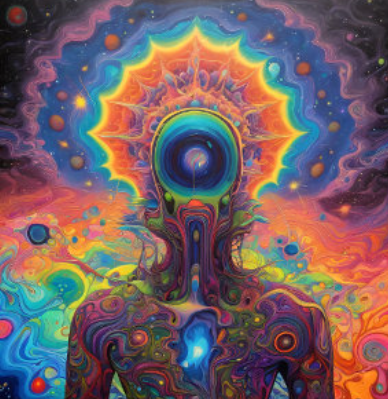
I quite enjoy a genre of music called psychedelic trance, having traveled to India and Greece to take part in the spirit of it with likeminded individuals. I saw an artist called Talamasca in Greece this past summer, he has a piece called “Day Dreaming” in which the cerebral cortex is mentioned several times. I find this highly entertaining as when I returned from my trip the next class I was involved in was neuropsychology. Alas, it was refreshing to hear about neurological functions in the context of psychedelic trance.
The four lobes of the cerebral cortex are the frontal lobe, parietal lobe, temporal lobe, and occipital lobe. The frontal lobe is responsible has two major parts, (1) the prefrontal cortex which is thought to control higher level processing in activities such as planning and organizing and (2) the back portion which is concerned with motor functions (Anderson, 2020). Conversely, the parietal lobe, which is located at the top of the brain, is concerned with advanced level perceptual processing and attention (2020), in other words is the location in which the main sensory processing takes place. The temporal lobe resides in both sides of the brain near the temples, it is responsible for activities such as memory formation, object recognition, and understanding language (2020). In turn the occipital lobe is located at the back of the brain and is responsible for the receiving and processing of visual and sensory information. Several notable visual tasks are depth perception and reading comprehension (Caffrey, 2025).
Left and right cerebral cortex
While the right and left side of the cerebral cortex are anatomically and functionally asymmetric (Sun et al, 2005), they do have differing behavioral and cognitive functions. The right side of the cerebral cortex is responsible for movement functions which regulate the left side of the body and the right side of the cerebral cortex regulates movement on the left side of the body (2005). In addition, the right and left side of the cerebral cortex cater to different types of cognitive and behavioral processing. The right side is more geared towards perceptual processing (Anderson, 2020) such as spatial awareness, creativity and artistic expression, intuition and nonverbal communication (Gamma, 2021). In turn, the left side is more concerned with language, science, logic, and time (2021). Interestingly, in the piece “Day Dreaming” the
Narrative voice says,
“The left side of the brain is dominant in the following skills, words, numbers, lines, logic, and analysis. The right side tends to be dominant in rhythm, color, spatial awareness, imagery, daydreaming. And you must know for example, creativity is not as nearly everyone in the world thinks, but creativity involves logic, it involves analysis, it involves words, songs, so the conclusion is that both sides of the brain in the cortex need to be used in harmony with each other, then you get an explosion of creativity” (Talamasca, 2013).
I am seeing Talamasca again this summer in Brazil.
The human and computer brain analogy
Similarities and differences
While there are many ways which the brain and computers are similar, I personally think that the most fascinating similarity is that of programming. A computer works that way that it is programmed to work, as a human brain (or any other animal species) brain is programmed to work. I guess we could get into defining criteria for programming and other terms related to this, but for the sake of discussion, I will define program or programming as the process of creating a set of instructions that a computer (or the brain) can follow to perform specific tasks (Shirer, 2025). Programmers write code or language for computers to use to perform tasks, with the human brain, the mind takes in stimuli and then translates the stimuli to a code or language to perform tasks (Brette, 2022). This is precisely why no two human beings perform tasks, execute plans, or participate in behaviors in exactly the same manner. The code language for each human being is different because programming, which is the way the mind converts and codes the incoming stimulus in order to perform tasks is different.
The mind, just like a computer programmer, can also re-write code so that the computer or brain performs the task in a different way than previously performed. However, while this would be much easier for a computer as it does not form habits, experience comfort, or cannot be subject to manipulation the way the human brain can, it can still be reprogrammed by the mind, or the mind of someone else. One of the differences however is that while a computer will likely only have one source of external programming (unless there is a hack) the brain may have many sources of external programming such as the individuals mind, the individual’s environment, external individuals and stimuli, and a number of other external producing stimulus which produce code language. Lastly, a computer does continuously evolve as the human brain does. The human brain is continually evolving and producing new structures and synapses (2022), whereas a computer can only do that when instructed by an external programmer; a computer has no agency.
How this analogy helps to study the mind
When the brain is looked at like a computer, the study of brain can then become related to hardware (machinery) and software (instructions). The study of the mind can then focus on outcomes (behaviors) and what type of code language may have produced that behavior. With the understanding of what code language may have produced what type of behavior then scientists can understand what code languages might be modified (Brette, 2022) in order for change to take place. The limitations and challenges of studying the brain as a computer are that, as I stated above, a computer has no agency, it does not evolve via personal experience, memory, or perception, it can only change via an external program, it performs only in the way you tell it to perform; good luck achieving that with human beings.
“The human brain is far more powerful than a computer, and than a supercomputer. It’s potential is still not known, but every time we put a boundary on it, the brain bashes through that boundary and goes further and further, so brilliance is a potential to everybody” (Talamasca, 2013).
References
Anderson, J. R. (2020). Cognitive psychology and its implications (9th ed.). Worth Publishers.
Brette, R. (2022). Brains as Computers: Metaphor, Analogy, Theory or Fact? Frontiers in Ecology and Evolution, 10. https://doi.org/10.3389/fevo.2022.878729
Caffrey, C. (2025). Occipital lobe. Salem Press Encyclopedia of Health.
Talamasca. (2013). Day Dreaming. Darcu Records.
Gamma, E. (2021). Left Brain vs. Right Brain | Simply Psychology. Www.simplypsychology.org. https://www.simplypsychology.org/left-brain-vs-right-brain.html
Shirer, D. L. (2025). Computer programming languages. Salem Press Encyclopedia of Science.
Sun, T., Patoine, C., Abu-Khalil, A., Visvader, J., Sum, E., Cherry, T. J., Orkin, S. H., Geschwind, D. H., & Walsh, C. A. (2005). Early Asymmetry of Gene Transcription in Embryonic Human Left and Right Cerebral Cortex. Science, 308(5729), 1794–1798.

 i do what waunt
Leave a comment